Where Students Build Real Things
Code & Circuit is a DIY Robotics & AI Education lab. Built around one idea: every student should leave with something they made themselves.
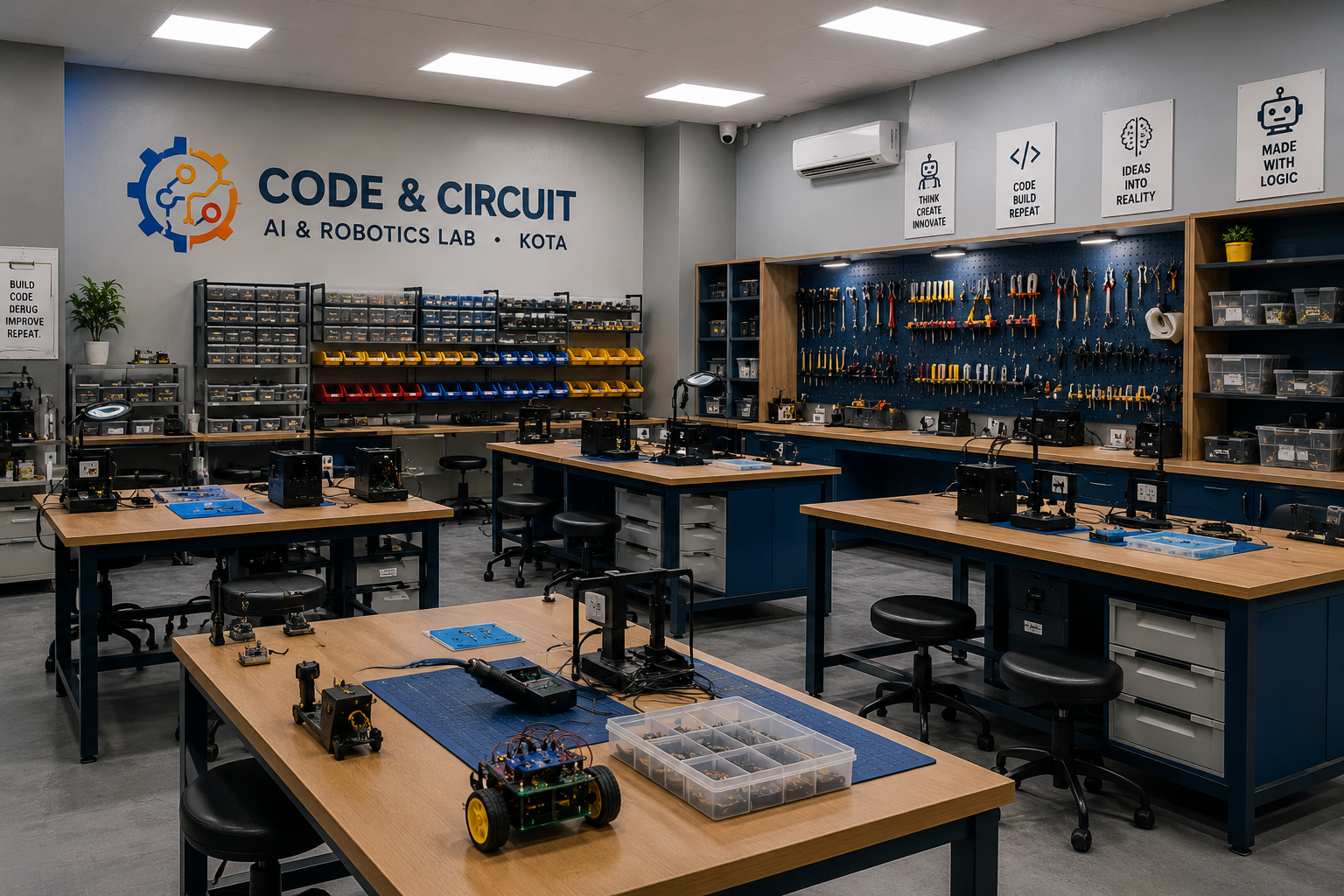
Our Story

Code & Circuit was founded by Lokesh Naraniya, a Certified Robotics Trainer with a background in electronics and computer science education. After years of teaching in Kota, he noticed a consistent gap: students could solve problems on paper but had never held a circuit board.
The lab was designed to close that gap. Every design decision — from the kit contents to the class structure — came from direct classroom experience: what confuses students, what excites them, and what they actually remember six months later.
The curriculum is developed by expert mentors who work with real components every day. It is structured around the NEP 2020 framework, making it compatible with school integration while remaining genuinely hands-on.
Our Approach
Build-first learning
Every concept is taught through a physical project. Students build in the first 15 minutes of every class — never just watch.
Real components
We use the same ESP32 microcontrollers, motor drivers, and sensors used in professional IoT products. Not toys, not simulations.
Small batches
6 to 10 students per batch. Every child gets direct attention, direct feedback, and direct help when they get stuck.
The 5-Step Build Method
Every class. Every project. Every student.
Learn
Concepts introduced through real examples — not abstract theory. Short, focused, and always tied to what they are about to build.
Wire
Students connect real hardware on a breadboard following a guided diagram. Mistakes happen here — and that is the point.
Code
Structured code is introduced gradually. Students type, upload, and observe results on the actual hardware.
Test
What works? What does not? Students debug, adjust, and improve. Critical thinking happens naturally.
Own
At the end of each project, it belongs to the student. They take it home, explain it to their parents, and feel genuine pride.
See it for yourself
Book a free 30-minute demo class, or a paid consult with the founder.